What Is a French Drain and How Does It Work?
A French drain is an underground drainage system designed to collect excess water from saturated soil and redirect it away from problem areas.
It typically consists of a perforated drainage pipe installed in a gravel-filled trench, often surrounded by filter fabric to help prevent sediment buildup. Water enters the gravel trench, flows into the perforated pipe, and travels toward a suitable discharge location.
French drains can help manage several drainage problems, including:
- Standing water in low areas of the yard
- Soggy lawns and oversaturated landscaping
- Excess groundwater near foundations
- Persistent moisture around patios and walkways
- Water collecting along property boundaries
Unlike sanitary sewer lines, which carry wastewater from plumbing fixtures, French drains manage groundwater and subsurface drainage. Their purpose is to improve water movement around the property and reduce persistent moisture problems.
Signs Your Property May Need a French Drain
Poor drainage can cause recurring problems around your yard and foundation, especially after heavy rainfall or melting snow.
Standing Water After Rain
Puddles that remain in the same areas long after a storm may indicate that water isn't draining through the soil efficiently.
Low spots, compacted soil, and inadequate drainage paths can contribute to standing water. A French drain may help intercept and redirect excess moisture when a suitable discharge location is available.
Soggy Lawns and Muddy Landscaping
If portions of your lawn remain wet while surrounding areas have dried, water may be collecting beneath the surface.
A properly positioned French drain can help move excess subsurface water away from saturated areas, improving drainage conditions around lawns and landscaping.
Water Collecting Near the Foundation
Excess water around basement or foundation walls can increase moisture pressure against the structure, potentially contributing to seepage through cracks and other vulnerable openings.
An exterior French drain may help manage groundwater near the foundation, although additional waterproofing or repairs may be necessary if water is already entering the building.
Damp Basements or Crawl Spaces
Musty odors, damp foundation walls, and recurring moisture in below-grade areas may indicate that groundwater is reaching the building.
Depending on the source of the problem, French drain installation may be part of a broader solution that includes basement waterproofing or a sump pump system.
Common Causes of Yard Drainage Problems in Cleveland
Cleveland's seasonal rainfall, snowmelt, and freeze-thaw conditions can contribute to saturated soil and recurring drainage issues. However, the property's grading, soil composition, and existing drainage systems also play important roles.
Common causes include:
- Poor grading: Ground that slopes toward the building can direct runoff toward the foundation instead of away from it.
- Compacted or slow-draining soil: Dense soil may absorb water slowly, leaving the ground saturated after prolonged rainfall.
- Runoff from higher elevations: Water flowing downhill from neighboring lots or sloped landscaping can collect in lower areas.
- Improper downspout drainage: Gutters and downspouts that release water near the foundation can contribute to excess moisture around the building.
- Inadequate drainage outlets: Water may accumulate when existing drainage systems lack a suitable discharge path.
Identifying the source of the water is essential. Some problems are better addressed through grading improvements, downspout extensions, or surface drains rather than a French drain alone.
Our French Drain Installation Process
An effective French drain requires careful placement, appropriate materials, and a suitable discharge location. Reliable Basement & Drain evaluates the property's drainage conditions before recommending an installation plan.
1. Evaluate the Drainage Problem
We review where water collects, how long areas remain wet, and whether the problem develops after rain, during snowmelt, or throughout the year.
Our team considers the property's slope, soil conditions, landscaping, and existing drainage features to identify possible causes.
2. Plan the Drainage System
We determine an appropriate location for the drain, considering trench depth, pipe slope, water collection areas, and the available discharge options.
Collected water must be directed to a suitable outlet that complies with applicable local requirements.
3. Install the French Drain
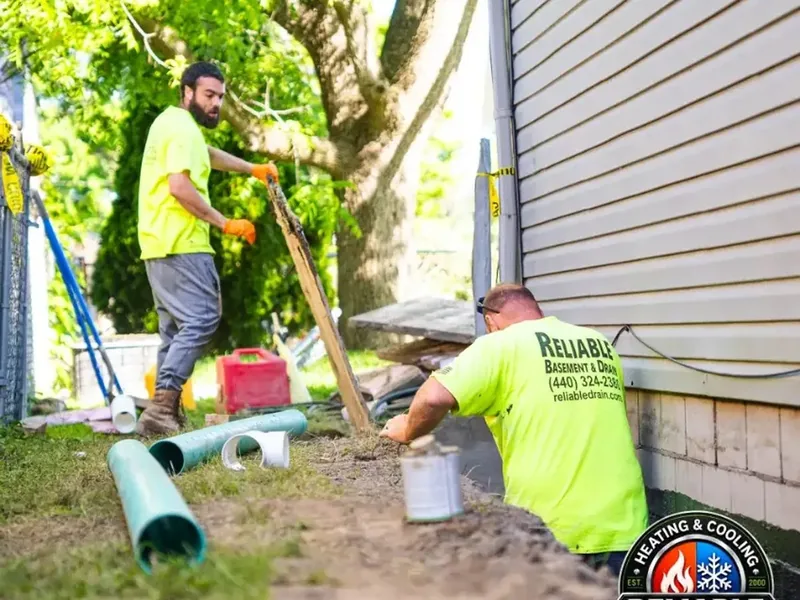
Installation typically involves excavating a trench, adding drainage-grade stone and filter fabric as appropriate, and placing perforated piping along the planned drainage path.
The pipe is surrounded by drainage material to help collect water from the soil and move it toward the designated outlet.
4. Restore the Work Area
After installation, the trench is backfilled and disturbed areas are prepared for restoration according to the project scope.
Our team can also explain how the system functions and what maintenance considerations may help support long-term performance.
Types of French Drain Systems
French drains can serve different purposes depending on where excess water is accumulating and how it affects the property.
Yard French Drains
Yard French drains collect subsurface moisture in areas that remain consistently wet.
These systems may be useful for soggy lawns, landscaping near slopes, and low areas where groundwater collects. Proper placement and a functional outlet are necessary for effective drainage.
Exterior Foundation Drains
Exterior foundation drains help collect and redirect groundwater near below-grade walls and footings.
They may help reduce water accumulation around the foundation, but they don't automatically repair foundation cracks or failed waterproofing systems. Additional measures may be necessary when basement leaks are present.
Interior Basement Drainage Systems
Interior perimeter drainage systems collect water near basement foundation walls and typically direct it toward a sump pump or another appropriate discharge arrangement.
These systems differ from exterior yard French drains and may be recommended when groundwater enters the basement through vulnerable foundation areas.
French Drains vs. Other Drainage Solutions
A French drain isn't always the best option for every drainage problem.
For example, standing water caused by poor grading may require landscape adjustments, while concentrated surface runoff may be better addressed with catch basins or surface drains.
Likewise, downspouts discharging too close to the foundation may need extensions or dedicated solid-pipe drainage rather than connections to a perforated French drain.
When basement moisture is caused by foundation cracks or failed waterproofing, additional repairs may be necessary.
Reliable Basement & Drain evaluates the property's conditions to determine whether French drain installation, another drainage improvement, or a combination of solutions is appropriate.
French Drain Installation FAQs
Will a French drain stop water from entering my basement?
A French drain can help reduce groundwater accumulation near the foundation, but it may not eliminate every source of basement leakage. Foundation cracks, failed waterproofing, or other defects may require additional repairs.
Can a French drain fix standing water in my yard?
Yes, particularly when standing water is caused by saturated soil or subsurface moisture collecting in low areas. Surface runoff and grading problems may require additional drainage improvements.
How deep should a French drain be installed?
Installation depth depends on the purpose of the system, property slope, soil conditions, and discharge location. Yard drainage and foundation drainage systems often have different depth requirements.
What is the difference between a French drain and a catch basin?
A French drain collects water moving through the surrounding soil using a gravel-filled trench and perforated pipe. A catch basin collects surface runoff through a grate or inlet and directs it into connected drainage piping.
Can a French drain become clogged?
Yes. Sediment, soil particles, and tree roots can gradually restrict water flow through a French drain. Warning signs include standing water returning to previously dry areas, persistently saturated soil, or reduced drainage at the outlet. Keeping discharge points clear and arranging inspections when drainage performance declines can help maintain the system.
How long does a French drain last?
A properly designed and installed French drain can function for many years. Its lifespan depends on installation quality, soil conditions, sediment accumulation, root intrusion, and outlet maintenance.
How much does French drain installation cost in Cleveland?
Pricing depends on the drain's length and depth, excavation conditions, materials, accessibility, and the required discharge arrangement. A property evaluation can help determine the scope of work and provide an estimate.
Schedule French Drain Installation in Cleveland, OH
Standing water, soggy landscaping, and excess moisture near your foundation can lead to persistent drainage problems without an effective solution. Reliable Basement & Drain helps Cleveland homeowners and businesses identify the causes of unwanted water and determine whether French drain installation is appropriate.
Effective yard drainage starts with understanding where water collects and how it moves across your property. Our team evaluates grading, soil conditions, and available drainage outlets to determine whether a French drain can help manage saturated lawns, standing water, or excess groundwater near your foundation.
Call (440) 324-2380 or request a free quote today to discuss French drain installation.